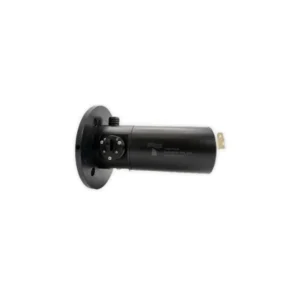
Dust Monitors Solutions for Industrial Processes
Dust monitors are used to continuously monitor dust concentration or particulate emissions in industrial stacks, ducts, flues and process lines. They help plant teams detect abnormal dust levels, monitor filtration performance and take action before dust-related damage, emission issues or equipment problems increase.
In industrial plants, dust levels can change due to bag filter leakage, ESP performance drop, process upset, fuel variation, material handling disturbance or combustion condition. A suitable dust monitor helps the environment, maintenance and operation teams understand dust behaviour in real time.
TIPL offers dust monitoring products for different site needs, including triboelectric dust monitoring and laser backscatter flue gas dust monitoring.
Choose the Right Dust Monitor Product
Different dust monitoring applications need different measurement methods. A plant team should select the product based on dust concentration range, stack or duct size, process temperature, output requirement, installation method and whether the application is for general dust detection or flue gas emission monitoring.
For simple dust concentration detection in ducts or pipelines, a triboelectric dust analyzer may be suitable. For stack and flue gas emission monitoring, especially where CEMS integration is required, a laser backscatter flue gas dust analyzer may be more suitable.
Dust Monitors Product Range
Triboelectric Dust Analyzer TDA-3000
The TDA-3000 is a triboelectric dust analyzer for real-time online monitoring of dust concentration. It uses charge induction generated by dust particles flowing around the probe and integrates the dust sensor, transmitter and digital display in one unit.
Best suited for: dust concentration detection, pipeline dust monitoring, powder recovery systems, pneumatic conveying, fixed pollution sources and industrial stack emission detection.
Online Flue Gas Dust Analyzer T-FGDA-1000
The T-FGDA-1000 is an online flue gas dust analyzer using laser backscatter measurement and digital signal processing. It is designed for real-time stack particulate emission monitoring and supports 4-20 mA and RS485 outputs for CEMS integration.
Best suited for: flue gas dust monitoring, stack particulate monitoring, CEMS dust measurement, baghouse monitoring, ESP performance tracking and industrial emission reporting support.
Where Dust Monitors Are Used
Dust monitors are used in:
- Industrial stacks and chimneys
- Flue gas ducts
- Baghouse outlet monitoring
- Electrostatic precipitator outlet monitoring
- Pneumatic conveying lines
- Powder material recovery systems
- Boilers and fuel combustion systems
- Kilns, mills and material handling sections
- Fixed pollution sources
- CEMS and emission monitoring systems
How to Select a Dust Monitor Solution
Measurement Method
Select triboelectric or laser backscatter measurement based on dust type, duct condition, stack application and monitoring purpose.
Dust Concentration Range
Check the expected dust concentration and select a range that can measure normal and abnormal conditions.
Stack / Duct Condition
Review duct diameter, stack diameter, gas flow, gas temperature, pressure and installation access.
Output Requirement
Confirm whether the plant needs 4-20 mA, relay output, RS485 or integration with PLC, DCS or CEMS.
Protection Requirement
Select suitable housing protection based on outdoor exposure, dust, rain, wind and site environment.
Maintenance Requirement
Check whether the application needs air purging, field calibration, mechanical cleaning or low-maintenance probe design.
Reporting Requirement
For environmental reporting or CEMS use, select a product suitable for continuous dust emission data.
Difference Between Triboelectric and Laser Backscatter Dust Monitoring
Triboelectric Dust Monitoring
Triboelectric dust monitoring uses the charge generated when dust particles move around or contact the probe. It is useful for real-time dust concentration detection in ducts, process lines, pneumatic conveying and fixed pollution sources.
Laser Backscatter Dust Monitoring
Laser backscatter dust monitoring uses light scattering from dust particles in flue gas. It is useful for stack particulate emission monitoring, CEMS integration and continuous monitoring of flue gas dust concentration.
Simple Selection Rule
Use TDA-3000 when the application needs triboelectric probe-based dust concentration detection.
Use T-FGDA-1000 when the application needs online flue gas dust monitoring with laser backscatter measurement and CEMS integration.
Industries Using Dust Monitors