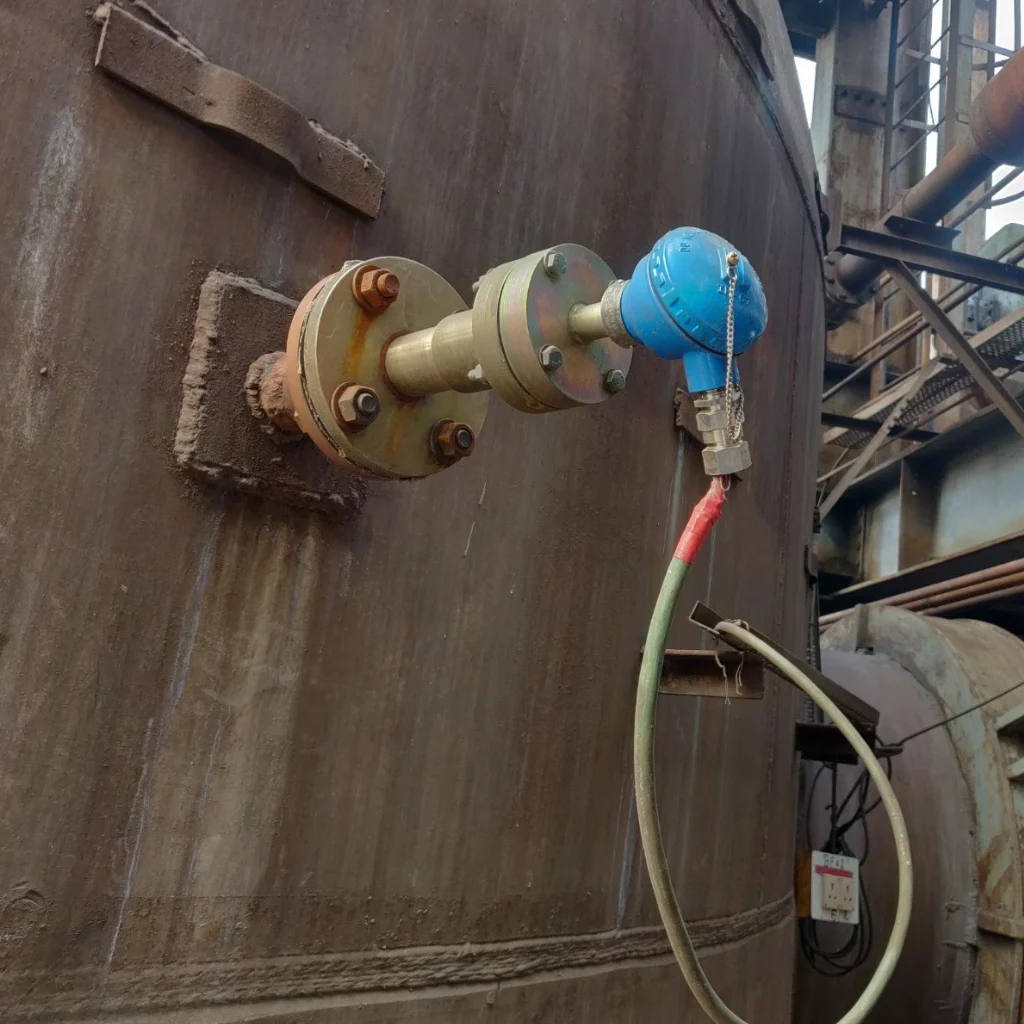
Thermocouple and RTD for Contact Temperature Measurement
Plants use thermocouple and RTD products to measure process temperature through direct contact. These sensors touch the equipment, medium or process area. As a result, teams can monitor temperature in pipes, tanks, vessels, furnaces, boilers, kilns and machines.
Both sensor types measure temperature, but each one fits a different need. A thermocouple suits high-temperature and rugged applications. However, an RTD gives better stability and accuracy in many process applications.
TIPL offers thermocouple sensors, RTD sensors and extension or compensating cables for industrial temperature measurement. So, users can select the right product based on temperature range, accuracy need, process condition and installation point.
Choose the Right Contact Temperature Sensor
The right sensor depends on the process. First, check the temperature range. Next, review the accuracy need, response time and process condition. Then, select the product that fits the application.
| Requirement |
Best Fit |
Product to Review |
| High-temperature contact sensing |
Furnaces, kilns, boilers, heaters and rugged process areas. |
Thermocouple |
| Stable and accurate temperature sensing |
Process equipment, tanks, pipelines, machines and accuracy-focused applications. |
Resistance Temperature Detector |
| Sensor signal extension |
Signal routing from field sensors to instruments, panels or transmitters. |
Extension & Compensating |
Note: Final selection should depend on process temperature, sensor type, accuracy need, response time, cable route, mounting style and site condition.
Sensor Product Range
Each sensor product plays a different role in the temperature measurement loop. Therefore, users should match the sensor and cable with the process need.
| Product Type |
Main Role |
Best Fit |
| Thermocouple |
Measures temperature with two dissimilar metal wires joined at the sensing point. |
High-temperature, rugged and fast-response applications. |
| RTD Sensor |
Measures temperature through resistance change in the sensing element. |
Stable and accurate temperature measurement in industrial processes. |
| Extension & Compensating Cable |
Carries the sensor signal between the field sensor and instrument. |
Thermocouple wiring, panel wiring and signal extension applications. |
Where Plants Use These Sensors
- Process temperature measurement in pipes, tanks and vessels
- Furnace, kiln, heater and boiler temperature sensing
- Steam, water, oil, gas and chemical process monitoring
- Motor, bearing and machine temperature measurement
- High-temperature sensing in steel, cement and metals plants
- Utility temperature monitoring in industrial plants
- Temperature input for transmitters, indicators and controllers
- Panel and field wiring through suitable sensor cables
How to Select the Right Sensor
Start with the process temperature. Then, check the medium, mounting point and accuracy need. After that, review the response time and cable route. This approach helps users select the right sensor construction.
- Temperature Range: Choose the sensor based on minimum and maximum process temperature.
- Accuracy Need: Choose an RTD when accuracy and stability matter more.
- Rugged Use: Choose a thermocouple when the application needs high-temperature or rugged sensing.
- Response Time: Check how fast the sensor must respond to temperature change.
- Process Connection: Review thread, flange, compression fitting or custom mounting need.
- Thermowell Need: Use a thermowell when pressure, flow or corrosion can damage the sensor.
- Cable Type: Select extension or compensating cable based on sensor type and distance.
- Site Condition: Check vibration, dust, moisture, ambient temperature and hazardous area requirement.
Thermocouple vs RTD Sensor
A thermocouple usually fits higher temperature and rugged industrial applications. It can respond quickly. Also, it works well in harsh process areas.
An RTD sensor gives better accuracy and repeatability in many applications. Therefore, plants often choose it for stable process temperature measurement.
So, the right choice depends on the process. High temperature, vibration and rugged duty may point toward a thermocouple. However, accuracy, stability and repeatability may point toward an RTD.
Industries Using Contact Temperature Sensors
- Power
- Steel
- Cement
- Metals
- Oil & Gas
- Chemicals & Fertilisers
- Water
- Food & Beverage