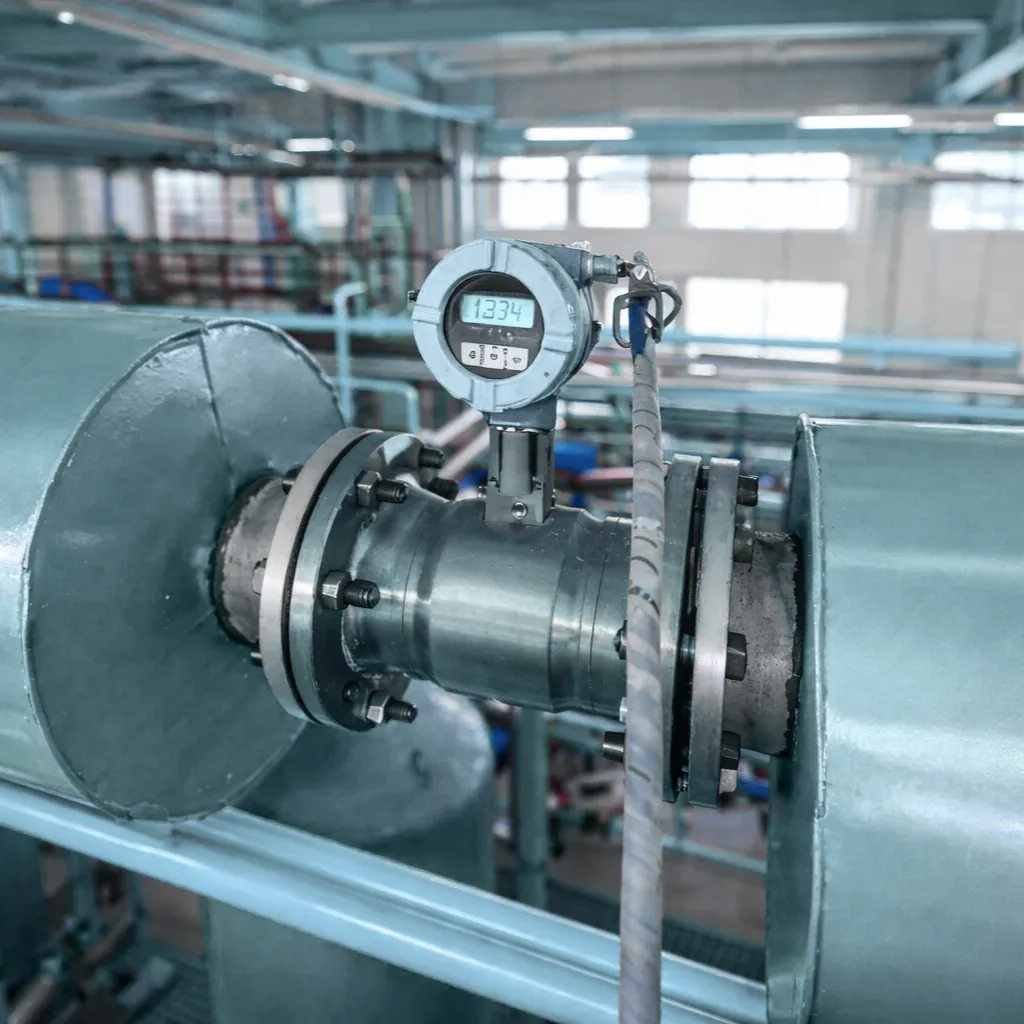
Turbine Flow Meter for Industrial Liquid Measurement
A turbine flow meter measures liquid flow by using the velocity of fluid passing through a turbine rotor. As the liquid moves through the meter body, it rotates the turbine, and the system converts this rotation into a flow signal. As a result, plants can monitor water, fuel, diesel and suitable low-viscosity liquid flow in process and utility lines.
TIPL offers turbine flow meter solutions for industrial liquid measurement where repeatable flow reading, compact installation and digital output matter. This technology works well for many clean and low-viscosity liquids. Therefore, users should select it after checking fluid cleanliness, viscosity, flow range, pressure, temperature and installation condition.
A turbine meter differs from positive displacement and magnetic flow technologies. For example, an oval gear meter suits many viscous liquids, while an electromagnetic flow meter suits conductive liquids. However, a turbine meter can work well when the liquid is clean, the viscosity is low and the flow profile remains stable.
Product in This Category
| Product |
Best Fit |
Review Product |
| TFM Series |
Liquid turbine flow measurement for suitable water, fuel, diesel and low-viscosity process liquid applications. |
Turbine Flow Meter |
Why Turbine Flow Measurement Matters
Many industrial liquid lines need simple and repeatable flow monitoring. For example, water lines, fuel transfer lines, diesel consumption points and clean process liquid lines may need continuous flow indication or signal output. Therefore, turbine flow technology can support process visibility in suitable applications.
In addition, turbine meters can provide pulse or electronic output for flow monitoring, totalization and control system integration. However, users must protect the rotor from dirt, debris and unsuitable media. So, filtration and correct installation practice play an important role in long-term performance.
Common Industrial Applications
- Water flow measurement
- Fuel flow measurement
- Diesel flow monitoring
- Low-viscosity liquid measurement
- Process liquid flow monitoring
- Utility liquid flow measurement
- Batching and dosing applications
- Loading and unloading systems
- Cooling water flow monitoring
- Industrial liquid consumption tracking
When to Choose a Turbine Flow Meter
A turbine flow meter works well when the application involves clean, low-viscosity liquid with steady flow conditions. Plants often choose it for water, fuel and similar liquids where the line condition supports turbine rotor operation.
However, users should not select this technology for every liquid. Dirty fluids, heavy slurry, highly viscous liquids or unstable flow profiles can affect measurement performance. Therefore, the final selection should depend on the actual media and installation condition.
How to Select the Right Turbine Flow Meter
Correct selection starts with the liquid condition. First, identify the liquid type and viscosity. Next, check minimum, normal and maximum flow rate. After that, review pipe size, pressure, temperature, connection type, output requirement and filtration need.
- Liquid Type: Confirm whether the application involves water, fuel, diesel or another suitable low-viscosity liquid.
- Fluid Cleanliness: Check whether the liquid is clean enough for turbine rotor operation.
- Flow Range: Review minimum, normal and maximum flow before selecting meter size.
- Viscosity: Confirm that the liquid viscosity fits turbine flow measurement.
- Installation: Check straight-run availability, pipe alignment and mounting orientation.
- Protection: Review filtration or strainer needs to protect the turbine rotor.
- Output Requirement: Review pulse, 4-20 mA, HART, RS485 or local display needs where applicable.
Related Flow Measurement Categories
Industries Using Turbine Flow Meters
- Power
- Oil & Gas
- Chemicals & Fertilisers
- Steel
- Cement
- Water
- Metals
- Food & Beverage