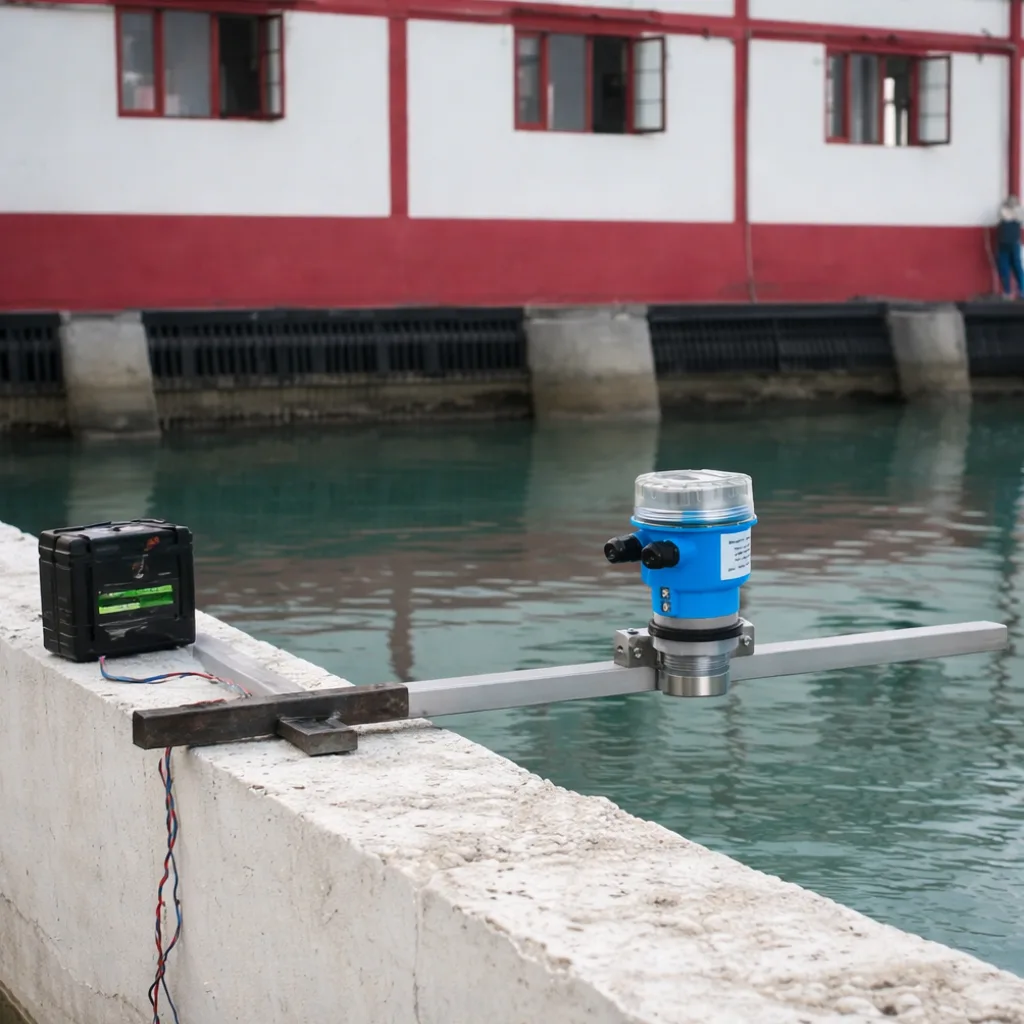
Integral Ultrasonic Level Transmitters for Compact Tank Monitoring
An ultrasonic level transmitter measures level without touching the liquid or solid surface. It sends ultrasonic pulses from the sensor face and calculates level from the echo return time. As a result, users can monitor tanks, sumps, vessels and storage areas without installing moving parts inside the process.
TIPL offers integral ultrasonic level transmitter models where the sensor and electronics are combined in one compact unit. This design suits applications where users need simple mounting, local indication and non-contact measurement in one instrument. Therefore, it can fit many water, wastewater, chemical, utility and storage tank applications.
Integral ultrasonic models work well when the installation point gives a clear path to the material surface. However, users should review foam, vapor, dust, turbulence, temperature, pressure, blind zone and mounting angle before selection. In addition, the measuring range and output requirement should match the actual tank condition.
Products in This Category
| Product |
Best Fit |
Review Product |
| TLTV1000A1 |
Compact non-contact level monitoring for suitable liquid and tank applications. |
Ultrasonic Level Transmitter |
| TLTV1000A2 |
Integral ultrasonic monitoring for tanks and process applications requiring compact installation. |
Ultrasonic Level Transmitter |
| TLTV1000A5 |
Compact ultrasonic measurement for selected level applications with model-specific range and output options. |
Ultrasonic Level Transmitter |
| TLTV1000A6 |
Integral non-contact level monitoring for suitable industrial tank and vessel applications. |
Ultrasonic Level Transmitter |
Why Integral Ultrasonic Technology Matters
Many plants need simple level monitoring without contact with the process media. For example, water tanks, sumps, chemical storage tanks and utility vessels may not need radar or guided wave technology. A compact ultrasonic device can provide a practical solution when the surface condition and installation geometry are suitable.
Also, the integrated design reduces separate transmitter mounting work. This helps in applications where space is limited or where the user needs a single compact instrument at the tank top. However, proper mounting remains important because obstacles, nozzles, foam or angled surfaces can affect echo quality.
Common Industrial Applications
- Water tank level monitoring
- Wastewater tank and sump monitoring
- Chemical storage tank monitoring
- Utility tank level indication
- Process vessel monitoring
- Open tank and pit monitoring
- Non-contact liquid level applications
- Selected solid or bulk material applications, subject to echo condition
- Storage tank inventory support
- Pump control and overflow prevention support
When to Choose Integral Type
Choose an integral type when the sensor and display can be mounted at the same point. This works well for accessible tanks, simple wiring routes and applications where operators can read or configure the instrument near the tank.
However, choose a remote type when the tank top has difficult access, high vibration, high temperature, hazardous location constraints or when the display must be installed away from the sensor. Therefore, site access and maintenance practice should guide the selection.
How to Select the Right Ultrasonic Model
Correct selection starts with measuring range and media condition. First, check tank height, maximum and minimum level, blind zone and mounting location. Next, review foam, vapor, dust, turbulence, temperature and pressure. After that, select the model, output signal, power supply and process connection.
- Media: Confirm liquid, slurry, foam tendency, vapor, dust or surface disturbance.
- Range: Match the model range with the actual tank height and working span.
- Mounting: Check nozzle size, mounting angle, tank roof and clear echo path.
- Blind Zone: Keep the highest level below the minimum measurable distance.
- Output: Confirm 4–20 mA, relay, HART, RS485 or display requirement.
- Environment: Review outdoor exposure, IP protection, temperature and cable entry.
- Service Access: Confirm whether local configuration at the tank top is practical.
Related Level Measurement Categories
Industries Using Integral Ultrasonic Level Instruments
- Water
- Chemicals & Fertilisers
- Power
- Steel
- Cement
- Oil & Gas
- Metals
- Food & Beverage