

Now offering advanced Process Optimization and CEMS solutions for all major industries.
Shop By Products
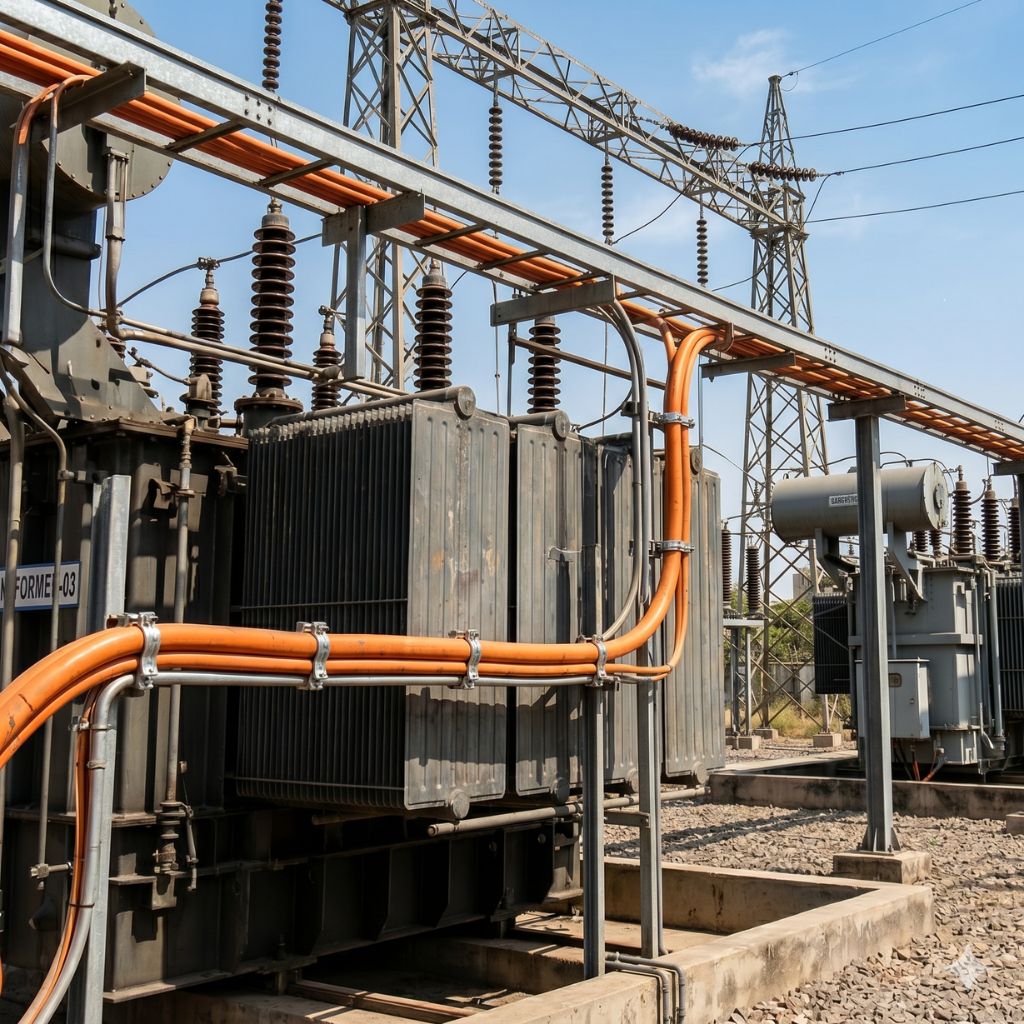

A distributed temperature sensing system uses optical fiber as a continuous temperature sensor. It helps monitor long-distance assets and gives temperature information along the fiber route. As a result, plant teams can detect hotspots, abnormal heating and fire-risk conditions with better location awareness.
TIPL offers fiber optic temperature monitoring solutions for industrial applications where route length, location accuracy and continuous monitoring matter. The range includes DTS1000 and DTS2000 for cable galleries, power cables, tunnels, pipelines, industrial equipment and other long-distance temperature monitoring applications.
Unlike point temperature sensors, this system monitors temperature along the complete fiber path. Therefore, it is useful where the risk is spread across long routes, hidden areas or difficult-access locations. Moreover, optical fiber is non-conductive, so it can support monitoring in electrically noisy or harsh industrial environments.
| Product | Best Fit | Review Product |
|---|---|---|
| DTS1000 | Long-range fiber optic temperature monitoring for cable galleries, power cables, tunnels and industrial assets. | Long-Range Fiber Optic Temperature Sensor |
| DTS2000 | High-density distributed fiber sensing for multi-channel industrial temperature monitoring and hotspot detection. | High-Density Distributed Fiber Sensing System |
Why Distributed Temperature Monitoring Matters
Many plant risks develop gradually. For example, cable joints, power cables, tunnels, pipelines and industrial equipment may show abnormal heating before a visible failure or fire event occurs. Therefore, continuous temperature monitoring can help teams identify early warning signs and act sooner.
In addition, location information is very important in long routes. If a cable gallery is several kilometres long, knowing only that “temperature is high” is not enough. Instead, users need to know where the hotspot is located so that maintenance or safety teams can respond quickly.
Distributed fiber sensing systems use optical fiber along the monitored route. The system sends laser pulses through the fiber and analyzes the returning light signal. Based on the temperature-dependent signal response and return time, it calculates both temperature and location along the fiber.
As a result, the same optical fiber can act as a continuous sensing line. This makes the technology suitable for long-distance temperature monitoring, hotspot detection and early fire-risk warning in industrial locations.
DTS1000 is suitable when long-range distributed temperature monitoring is required. It supports long-distance monitoring and can be used where users need route-wide temperature visibility, hotspot detection and early fire warning across extended assets.
DTS2000 is suitable when higher channel density is needed. It supports 4, 8 or 16 channel options and is useful when multiple routes or zones need monitoring from one system. Therefore, users can select DTS2000 where high-density distributed sensing and multi-channel coverage are important.
Correct selection starts with the monitored route. First, define the asset type, route length and number of zones. Next, check whether the site needs long-range monitoring, multi-channel monitoring, relay outputs, communication interface, display requirement or integration with fire alarm / SCADA systems. After that, select the model and fiber cable arrangement accordingly.