

Now offering advanced Process Optimization and CEMS solutions for all major industries.
Shop By Products

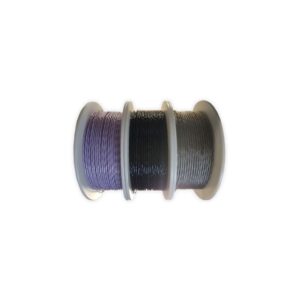
A digital linear heat detection cable helps detect overheating or fire-risk conditions along a protected cable route. It works as a continuous heat-sensitive detection line and can trigger an alarm when a fixed temperature condition is reached. As a result, it is useful for long, harsh or difficult-access industrial areas where point detectors may not be practical.
TIPL offers digital heat detection cable solutions for industrial fire safety applications such as cable tunnels, cable trays, conveyors, switchgear cabinets, tank areas, cold rooms, warehouses and underfloor cable voids. Moreover, this type of system can support early warning where smoke detection may be affected by dust, air movement or environmental constraints.
Unlike general fire alarm wiring, this cable is itself the sensing element. Therefore, users should not select it like a normal signal cable. Instead, the selection should be based on alarm temperature, ambient temperature, route length, mechanical protection, hazardous-area requirement and fire alarm system integration.
| Product | Best Fit | Review Product |
|---|---|---|
| Digital Linear Heat Detection Cable | Fixed-temperature heat detection for cable trays, conveyors, tunnels, cabinets and harsh industrial fire-risk areas. | Digital Linear Heat Detection Cable |
Many industrial fire risks begin as local overheating. For example, cable joints, conveyor rollers, electrical panels, tank rim seals or product transfer areas may heat up before visible flame appears. Therefore, a cable-type heat detector can help monitor the risk path continuously.
In addition, digital heat cable can be installed close to the risk area. This is helpful where detectors installed on a ceiling may be too far from the actual source of heat. However, the cable route and alarm temperature must be selected carefully so that the system responds correctly for the application.
Fixed-temperature cable detection is useful when the alarm condition should be linked to a defined temperature point. For example, a cable may be selected with a 70°C, 90°C or 180°C alarm temperature depending on the site condition and risk profile.
Also, this solution is practical when the protected route is long or when maintenance access is difficult. In such cases, the sensing cable can cover the route continuously and can be monitored through suitable control equipment, end-of-line devices and fire alarm interfaces.
Correct selection starts with the application risk. First, identify the route to be protected. Next, check the normal ambient temperature, expected abnormal temperature, mechanical exposure, chemical exposure and installation route. After that, select the alarm temperature, sheath type, armour requirement and controller/interface arrangement.
Showing the single result