


Now offering advanced Process Optimization and CEMS solutions for all major industries.
Shop By Products
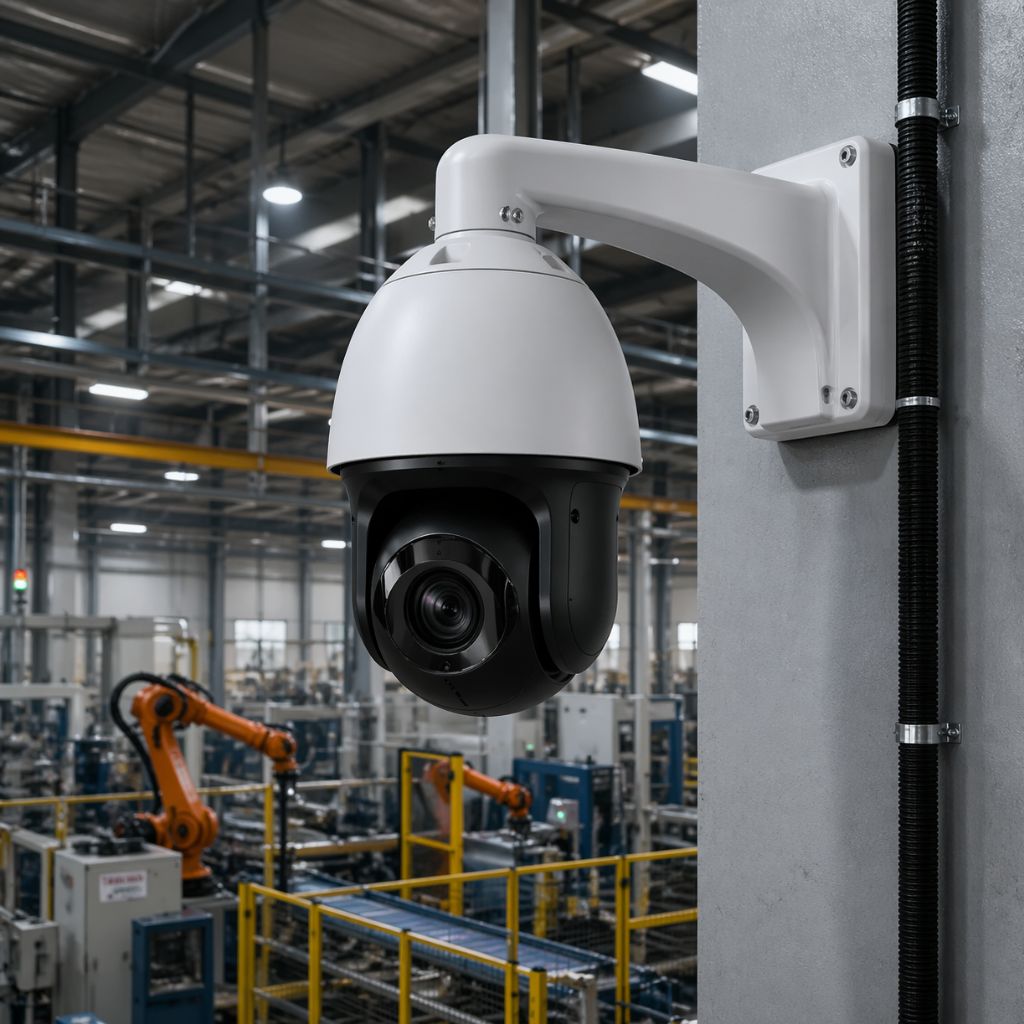

A PTZ camera helps industrial plants monitor wider and longer-distance areas with pan, tilt and zoom movement. It is useful where a fixed camera cannot cover the complete surveillance requirement. As a result, plant teams can zoom into distant activity, track movement and improve visibility across large outdoor areas.
TIPL offers PTZ camera models for industrial CCTV systems where long-range monitoring, AI-based tracking, night visibility and site safety matter. These cameras can support surveillance of plant boundaries, yards, roads, tank farms, loading areas, utility zones and other critical outdoor locations.
Industrial PTZ cameras are different from basic surveillance cameras. A plant may need optical zoom, fast movement, IR visibility, weather protection, AI-based detection and reliable integration with NVR or VMS platforms. Therefore, users should select the camera based on monitoring distance, zoom requirement, lighting condition, mounting height, area coverage and control room workflow.
| Model | Best Fit | Review Product |
|---|---|---|
| WV-S66300-Z3L | 32x PTZ network camera for industrial outdoor monitoring, AI-based tracking and long-range surveillance. | PTZ Network Camera WV-S66300-Z3L |
| WV-S66300-Z4L | 40x PTZ network camera for longer-distance monitoring, perimeter visibility and wide-area plant surveillance. | PTZ Network Camera WV-S66300-Z4L |
PTZ cameras are useful when operators need to monitor a large area instead of one fixed direction. For example, a PTZ camera can help security teams scan a yard, follow vehicle movement, check perimeter activity or zoom into a distant point during an event. Also, it can support control room teams during incident review and live monitoring.
A PTZ camera is suitable when the site needs movement control, zoom visibility and wider coverage from one camera location. It is especially useful for open areas where activity may happen in different directions. In these cases, pan, tilt and optical zoom help operators focus on the area of interest.
For fixed monitoring of one gate, wall, road or equipment area, a bullet camera may be more suitable. However, for larger outdoor zones, long-distance views and operator-controlled surveillance, a PTZ camera gives more flexibility.
AI-based PTZ camera features can help improve surveillance workflow when the system is designed correctly. Depending on camera capability and software setup, AI can support movement detection, object detection, auto tracking and more focused event monitoring. As a result, users can reduce manual viewing load and improve response to important activities.
However, AI performance depends on real site conditions. Camera height, viewing angle, distance, lighting, network stability and analytics configuration all affect the result. Therefore, users should define the surveillance objective before selecting the PTZ model.
Correct PTZ camera selection starts with the monitoring area. First, identify the distance and coverage required. Then, check whether the operator needs 32x zoom, 40x zoom, IR visibility, auto tracking, high-speed movement or centralized control. After that, match the camera with the correct NVR, VMS and network design.

